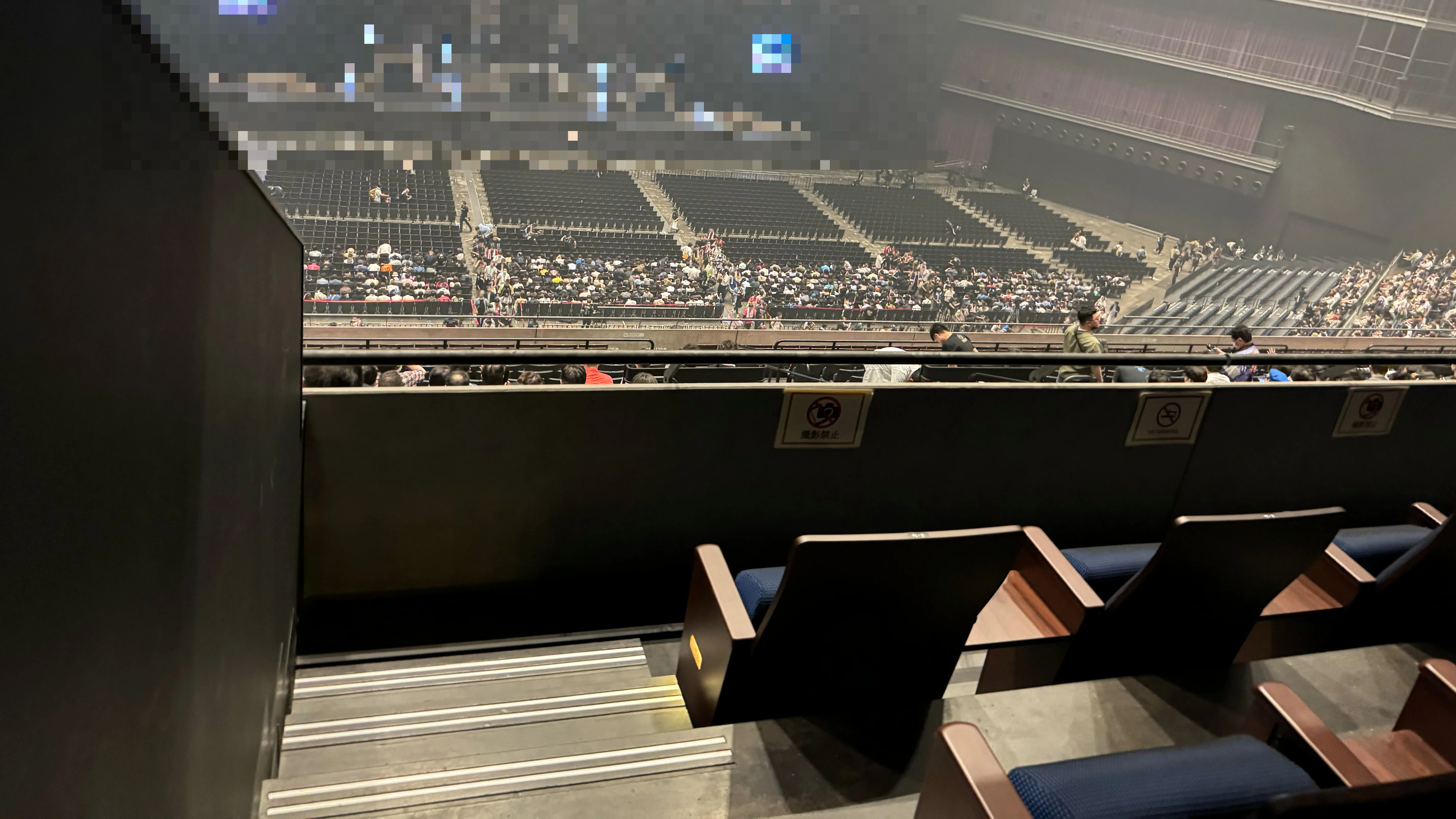
Standardized Testing Methodology: Evaluating Legroom
How I evaluate usable legroom and why the test is designed in this way.
Legroom can make or break a concert experience, but it’s also one of the hardest things to compare across venues. Seat specs are rarely published, and even when they are, they don’t tell you what you actually want to know: can I fit my bag at my feet without spending the whole show fighting for space? This is a standardized test I designed to answer that question the same way, every time, across every venue.
Why not just measure seat pitch?#
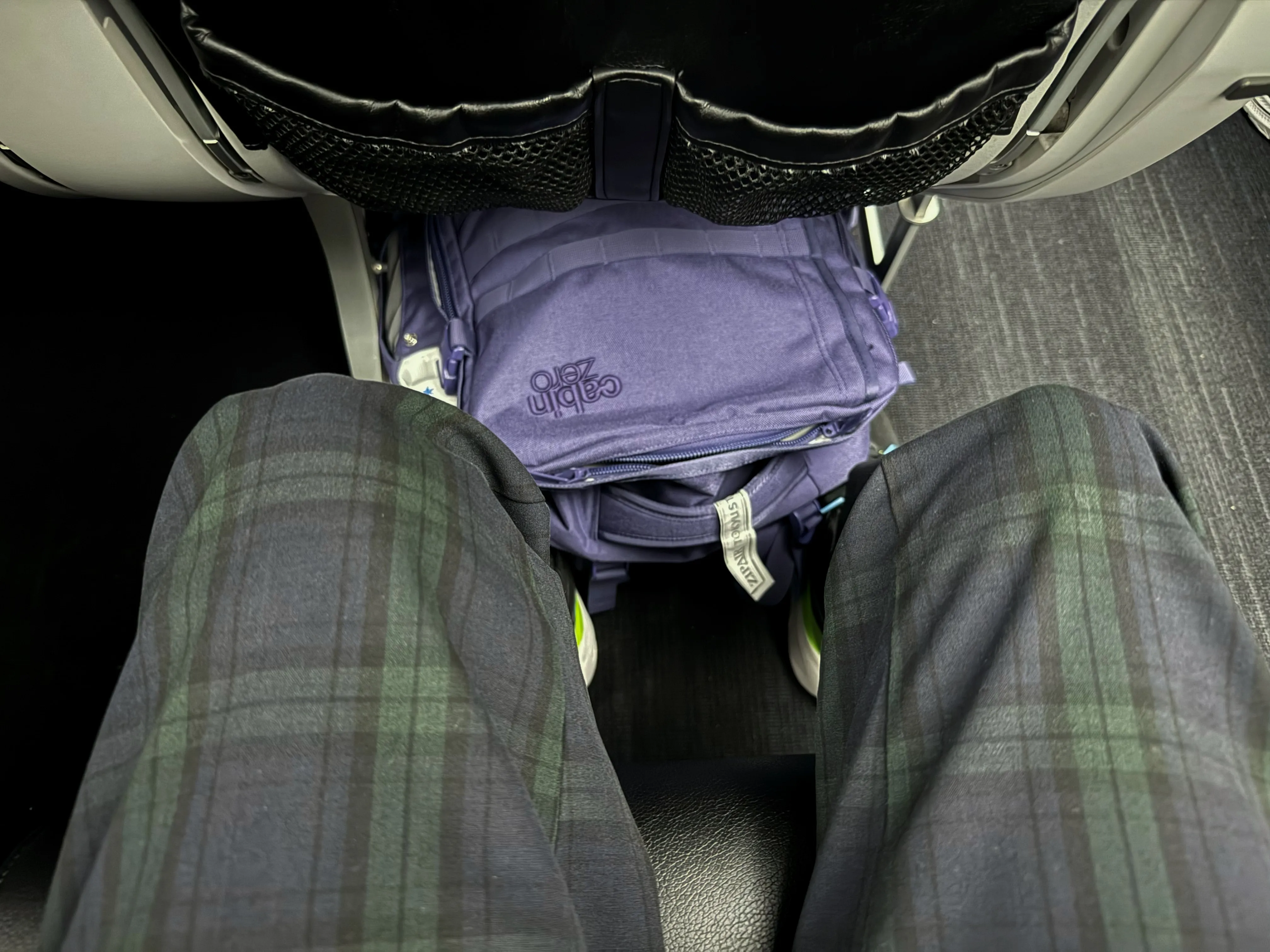 ZipAir Japan seat POV. Seat pitch generally estimates your legroom on an airline, but it includes the size of the hard product seat you’re sitting on.
In practice, the footwell at a concert venue does 3 jobs. It’s your legroom, the bag storage space and standing space. A seat pitch measurement used in the aviation industry is not a good proxy for this, as that’s an engineering number that includes the thickness of the backrest. In practice, two seats with the same pitch number can have different legroom and standing experiences.
This test is meant to be a repeatable real-world bag-fit test that helps to compare usable legroom across venues.
The Test#
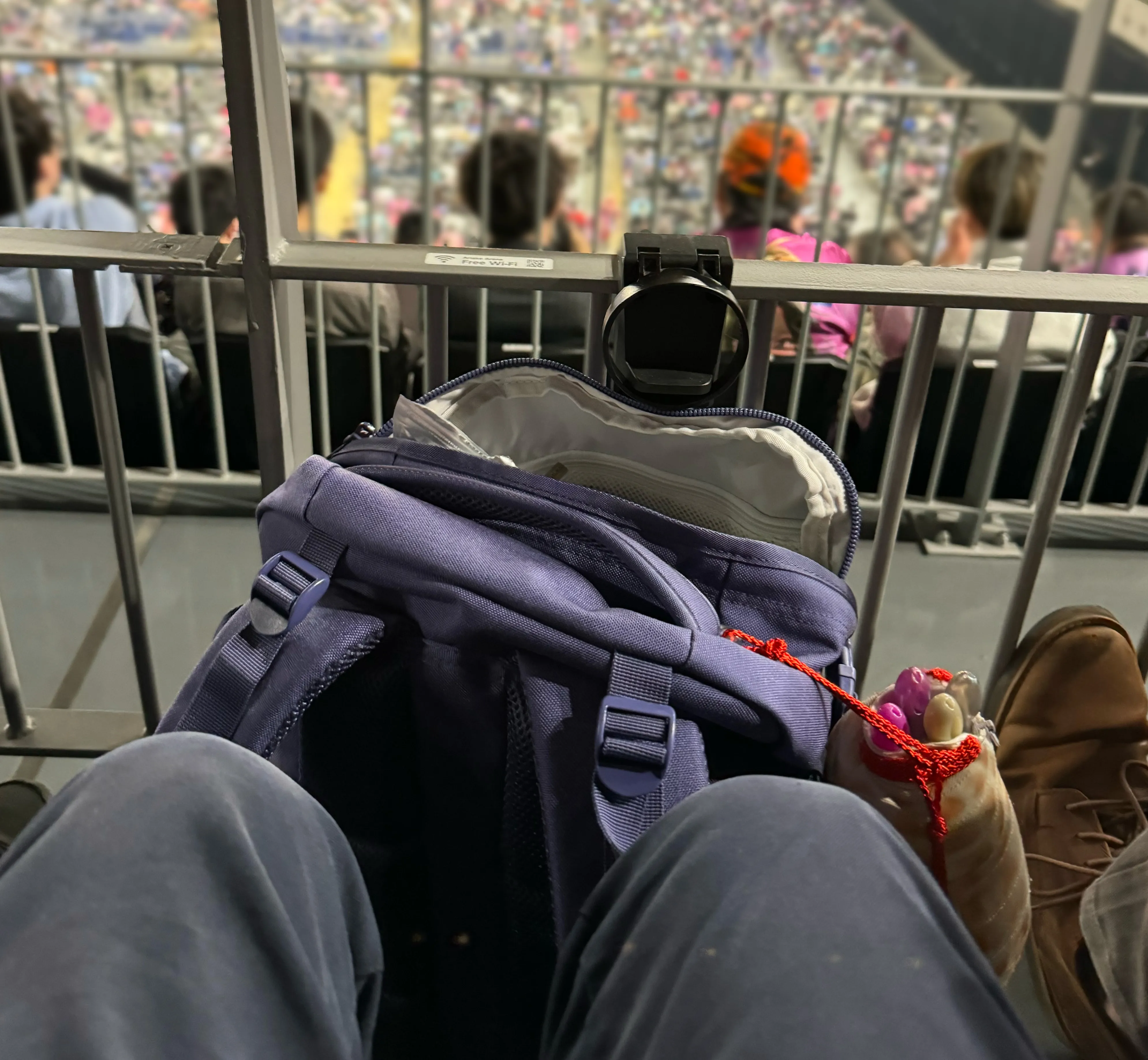
- Seated upright in chair, hip to back, legs straight forward. Formal photo sitting position.
- The same backpack is used each time: a fully packed Cabin Zero Military 36L v3 loaded with typical concert items such as light sticks, chemical lights, and other essentials.
- The bag is set upright, parallel to the seat and pushed as far forward as it can go towards the seat area in front. The bag is allowed to lean to make full use of available space, as long as its standing upright.
- Note down the amount of remaining space.
Note: Airline-style storage under the seat in front is not used in this test. Some standardized concert chairs like folding pipe chairs allow for bags to be stored under the seats by laying it flat. This test deliberately disregards that possibility for consistency, as that lie-flat space is not actually usable standing room in most cases.
Rating Scale#
- Won’t fit: It is impossible to put the bag in that position. It must be stashed some way or somewhere else. This indicates legroom is very poor.
- Knee Contact: The bag makes contact with the knees. This means my knees are somewhat compressing the bag contents and the legroom is not very good.
- Shoe Contact: The bag makes contact the shoe but not the knees. This means the shell of the backpack may get close to the knees but isn’t touching. This is an average result.
- No Contact: The bag leaves a space between it and my knees. This is the general point where legroom is good.
- Large Gap: There’s almost 1 shoe length (approx 20-27 cm) worth of distance between my shoe and my bag. This represents only the craziest outliers in venue legroom and is very rare.
Reference Measurements#
For any of that to make sense you will need my real life measurements:
- I am 164cm tall, which is short by Japanese male standards (avg 170~ cm) but taller than the average Japanese Female (avg 158~ cm) (Wikipedia ↗)
- The cabin zero military 36L v3 I use is approximately 46 × 33 × 16 cm when stuffed. This means that approximately 16cm of the footwell space is consumed by the bag.
- When seated fully back in a typical office chair, I measure about 60cm from the seat back (not from the front of the torso) to my knee.
To put those numbers in perspective:
- This means a “Knee Contact” grade is roughly comparable to a seat pitch of <30 inches or 75 cm, worse than most airline Economy class seating.
- A “Large Gap” grade approaches 40 inches or 102cm in seat pitch, which is around or better than Premium Economy is on airlines, and is close to the 41 inches offered on basic seats on the Tokaido Shinkansen.
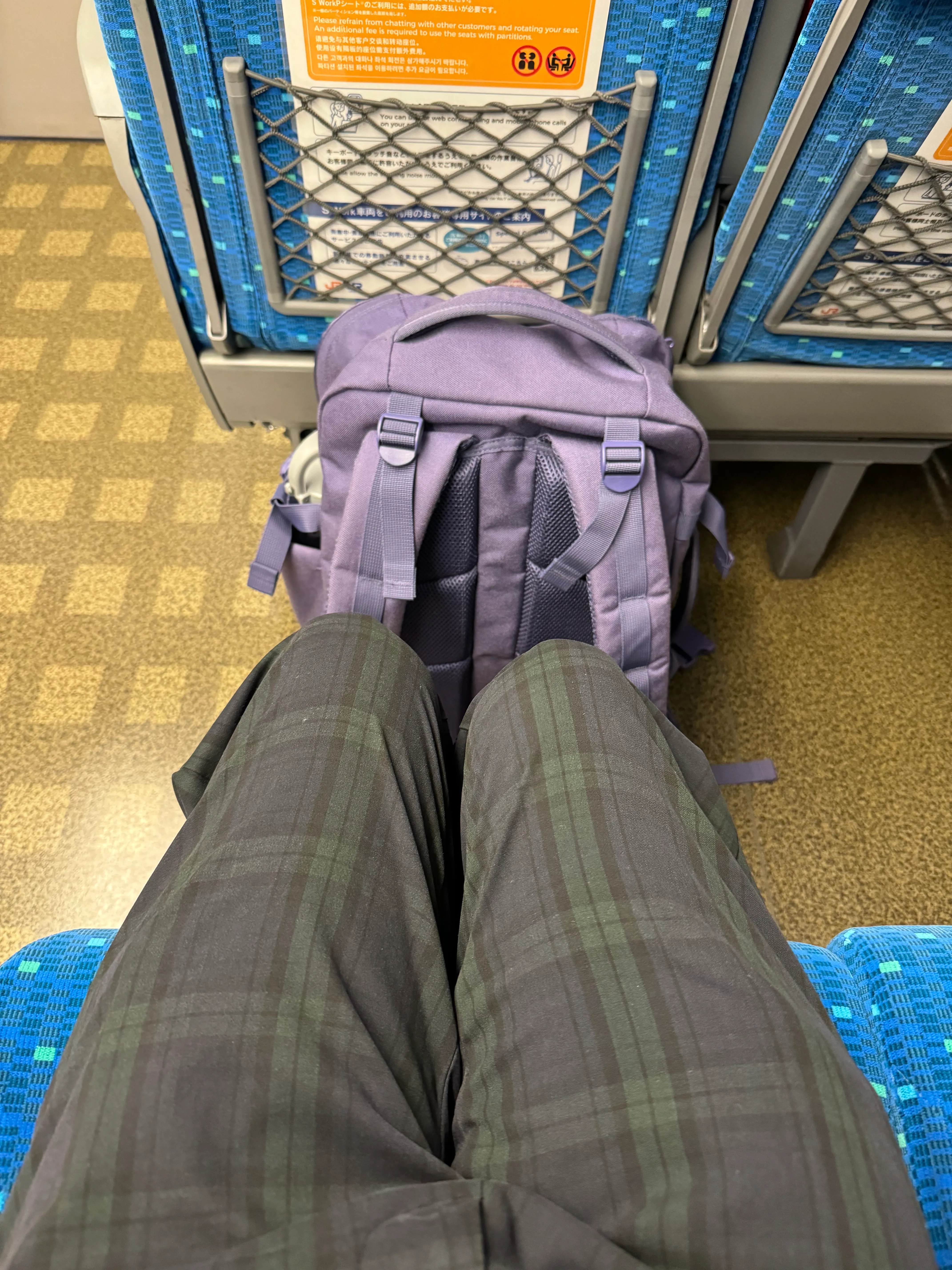 Tokaido Shinkansen legroom comparison for reference. If only most concert venues had this level of excess.
Example#
Here’s an example of how the results will be displayed in my concert venue guides.
| Location | Rating | Remarks |
|---|---|---|
| Level 1 | Did not test | Seats don’t fold. |
| Level 2-4 | Average (Light Contact) | Seats fold, but some of that footwell space is obstructed |
| Level 3 Special seats | Above Average (No contact) | Seats fold |
Why this methodology works#
- Discreet - No need to pull out tape measures and look like a weirdo
- Easy to do - There’s no chance I forget to do it because this is how I typically set up while waiting for the show to start
- Assesses usable space - Using a standardized spacer (the bag) can be better than looking at raw seat pitch numbers by assessing the real usable legroom.
- Good enough measure - The goal isn’t to get exact specs in mm so that we can sweat numbers about which venue is better. Ultimately, this tells you which venues are likely to cause problems and which are not. This is sufficient to make informed decisions.
- Repeatable - The simplicity of this testing methodology helps ensure that the test is done right every single time.
Weaknesses of the technique#
This is so that you know what this measurement can’t tell you, and the concessions that we make in using an easier testing methodology.
- Results will depend on body size and posture. All the measures that I do will differ from anyone else, but it will give people a starting point for relative comparisons.
- It does not convert neatly into official seating specs. A venue may look better on paper by seat-pitch numbers while still feeling worse in practice because of seat thickness, obstructions, or footwell design.
- Recline angle and footwell obstructions can affect the outcome. This includes things like rigid cupholders sticking out of the seat, or the seat’s recline allowing more of the bag to fit forward.
- The in-seat experience can still differ due to other factors. Seats that don’t fold when standing, footwells with weird inclines to prevent items from being stuck under the seat, drainage covers that protrude. These are just some examples of real world factors that impact your standing experience that this test doesn’t fully cover.
Conclusion#
It is not a perfect measurement, and it is not trying to be. By keeping the setup the same each time, the results are consistent enough to spot real differences, flag problem venues, and help readers make smarter decisions about what kind of bag they can realistically bring. That’s the goal: turning a vague impression of “legroom seems fine” into something you can actually compare and rely on.