Hilton Yokohama offers absurdly convenient access to K-Arena. That’s one of its biggest selling points, but does the rest of the hotel experience hold up? This review will go over whether the price premium is justified and what you get for your money.
I’ll go through the room, facilities, breakfast, and overall experience first. At the end, I’ll talk specifically about what staying here is like when attending a live at K-Arena.
This won’t be a complete review of all facilities and services. You can search other reviews for that. Instead, we’ll be focusing on how cohesive the experience feels, how much friction it removes, and the attention to detail. Personally, those are the key things I’m looking for when I pay more for a premium hotel.
Stay details:
- Stay Date: 5-8 Sept 2025
- Nights: 3
- Total Cost: 102,047 JPY with breakfast included
- Booking Via: Hotel Website, No Hilton Honors Status
- Check In Time: 3PM (was granted early check in at 2PM)
- Check Out Time: 11AM
Location and Access#
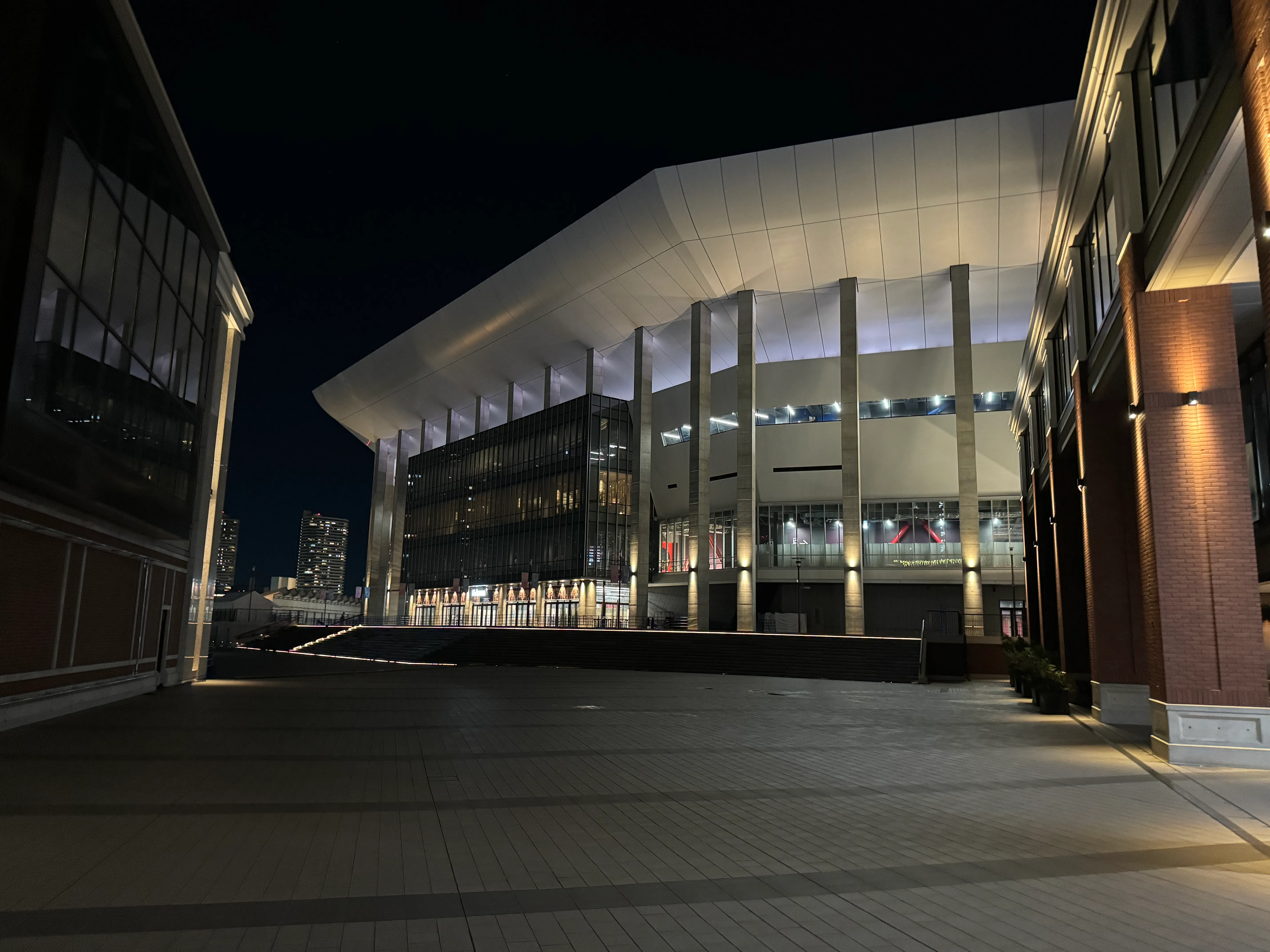 Hilton Yokohama is right beside K-Arena, it’s private lift lobby is just to the back right of where this photo was taken.
Hilton Yokohama sits immediately beside K-Arena Yokohama, between the arena and the Music Terrace complex.
To get from Shin-Takashima Station you can take the lift at exit 3 which will bring you to street level. From there you can cross the street, walk down past the Anpanman Museum and then turn left to go up the Music Terrace. lift access is available. This would be my preferred way to reach the hotel with luggage.
If you need more alternative ways to reach the Music Terrace and Hilton Yokohama, you can refer to my guide for K-Arena which covers the area in more detail.

The hotel entrance and front desk are located at roughly the same level as the large K-Arena Terrace Vision screen, on the elevated walkway connecting the surrounding buildings. From the lobby, you also get a fairly nice view of the area.
For a normal sightseeing trip, the location is not the best. Shin-Takashima is close to Yokohama Bay area, Pacifico Yokohama and some attractions around the bay, but the general lack of surrounding amenities makes Yokohama station a more practical base. The additional distance to walk to Yokohama from this hotel is not negligible.
For anyone attending an event at K-Arena, however, location is arguably the hotel’s biggest selling point.
Pre-Check-In and Hilton Honors App#
Hilton allows you to perform digital check-in through the Hilton Honors app.
One particularly nice feature is room selection. Subject to availability, you can choose a specific available room within the room category you booked, including the floor and location.
If you care about being higher up, further from the lifts, or in a particular part of the building, being able to choose this yourself is a small but genuinely useful perk. Note that it’s only within your purchased category, so for instance I couldn’t select a high floor room because that’s a separate price. I could however, choose the highest floor within my purchased category, which I think was floors 7 to 15. The hotel has 26 floors total.
You receive notification for the digital room check in the day before, via the app and email. Unfortunately in my case as a foreigner I was still required to visit the front desk to get physical keys and have my documents inspected.
Check-In and Service#
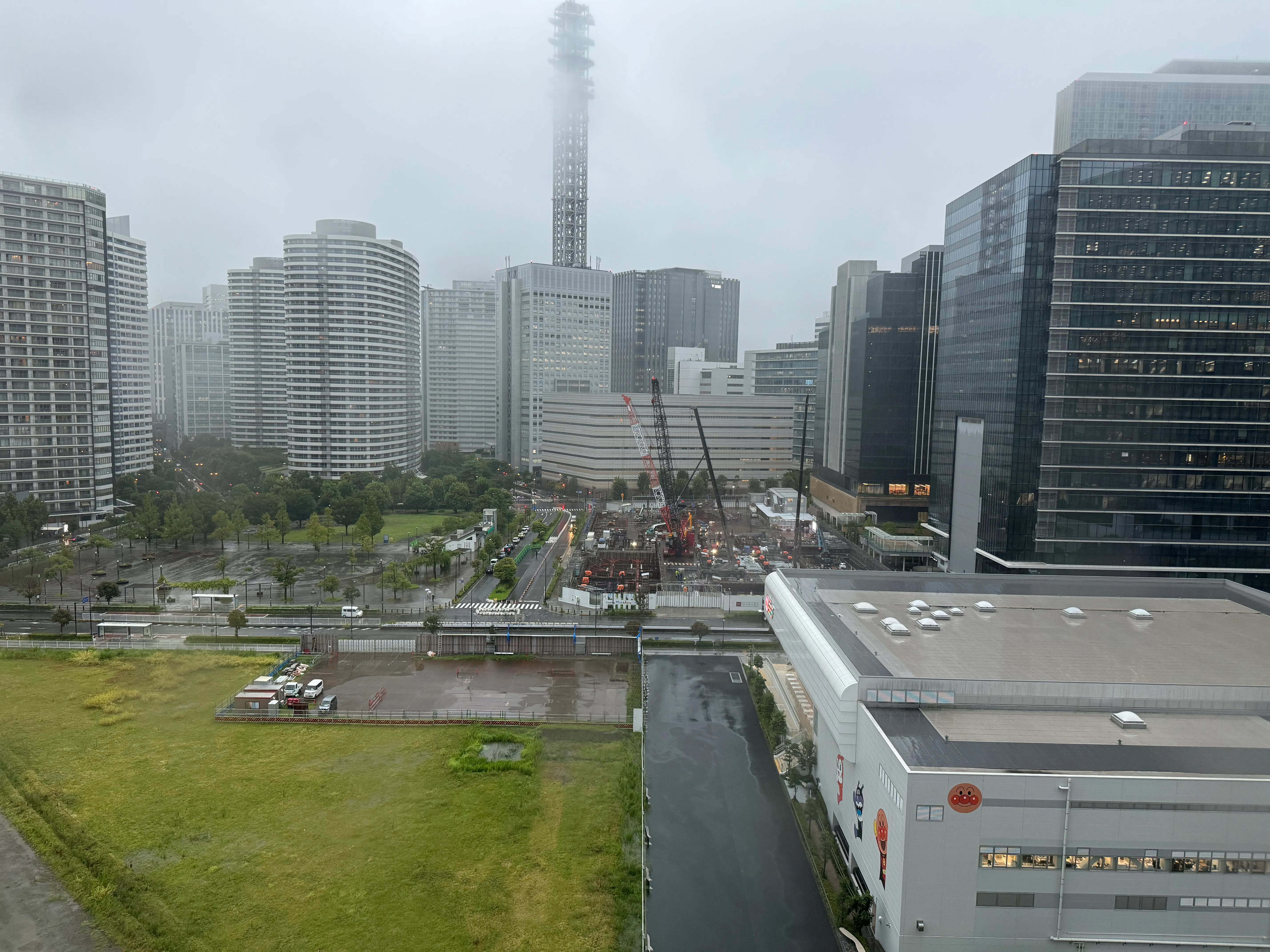 Post-Typhoon view from Hitlon Yokohama Room
I arrived in the middle of a typhoon, which gave me a fairly memorable first impression of the service.
As soon as I arrived, the front desk handed me a towel to dry myself while another member of staff wiped down my luggage.
It is a small gesture, but this is the sort of attention to detail that separates Hilton from the cheaper business hotels nearby. You are paying considerably more, and part of what that money buys is a higher level of service.
There was no wait for check in at that point in time. The hotel lobby does have plenty of seats for lounging despite essentially being a large bridge. Privacy panels scattered around the level give you a slightly elevated sense of isolation, though I would not consider the seating “private” feeling in any sense.
On the day of check in, front desk staff appeared to be Japanese natives. I typically initiate conversation at any service desk in Japanese, so I did not get a chance to assess English service quality. That being said, observing hotel staff interact with guests on the sidelines gave me the impression that English service was more of a best effort basis for this hotel.
The Room#
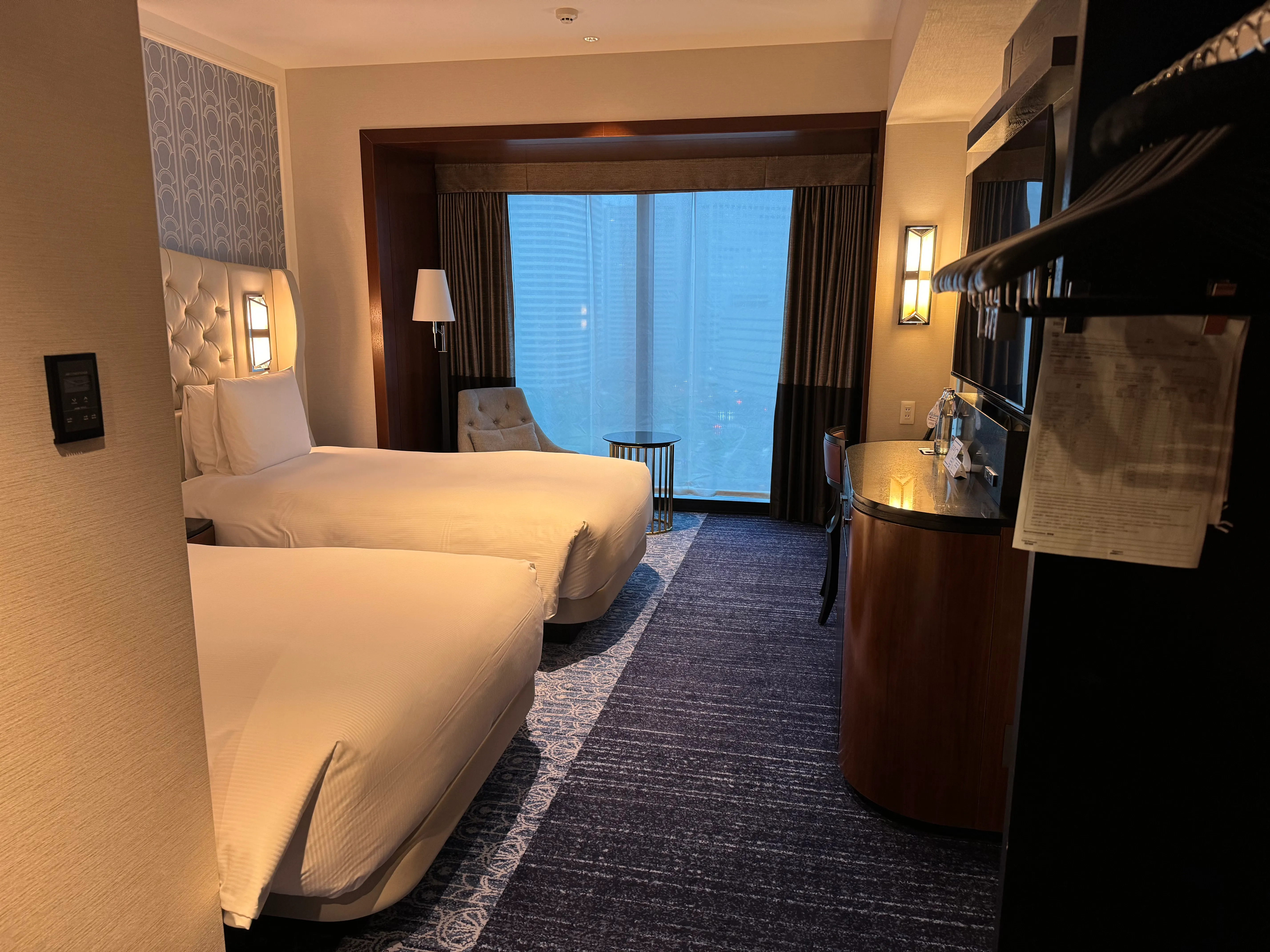
I stayed in the entry-level Twin Deluxe Room (デラックスルーム・ツインベッド), listed at approximately 31 square metres.
The basic Twin Deluxe Room is large and spacious for a Japanese hotel
Even though this is Hilton Yokohama’s cheapest standard twin room, it feels substantially more spacious than the business hotels I normally use in the area.
For comparison:
- APA Hotel & Resort Yokohama Bay Tower: approximately 11 m², around ¥12,000 per night during one of my stays
- Sotetsu Fresa Inn Yokohama Sakuragicho: approximately 18 m², around ¥12,700 per night including breakfast during one of my stays
- Hilton Yokohama Twin Deluxe: 31 m², ~¥34,000 per night including breakfast
These aren’t necessarily apples-to-apples comparisons—the rates vary enormously depending on the date—but they give you an idea of the difference in space.
A key point to raise here is that this is the smallest room offered by Hilton Yokohama. If you were to book a King Deluxe Room with one bed instead of 2, it would still be of this size. This makes it compare much more favorably even against other luxury properties which have a dedicated smaller size for single bed rooms.
View#
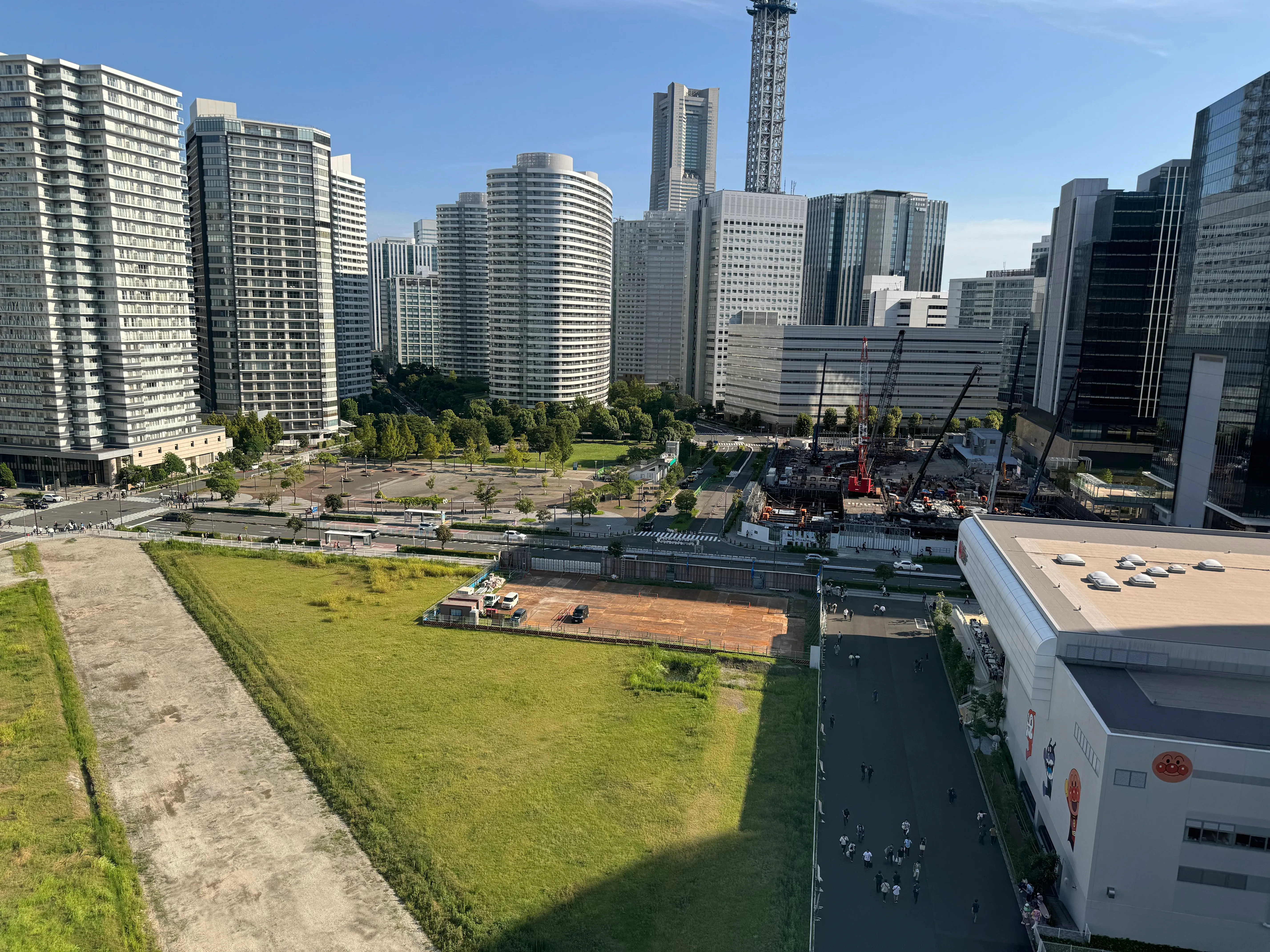 View from the room.
One important thing to know is that the cheapest Deluxe rooms do not face K-Arena.
If having an arena-facing room matters to you, you will need to book one of the appropriate higher room categories, such as the Premium Twin/King Room, which is approximately 39 m².
Room view was unremarkable, featuring the roof of the Anpanman museum and some other commercial and residential buildings around the area. In a 2026 revisit to the site, I noticed that the construction had intensified and the grassy field visible in the photo was now under construction.
Bed and Sleeping Comfort#
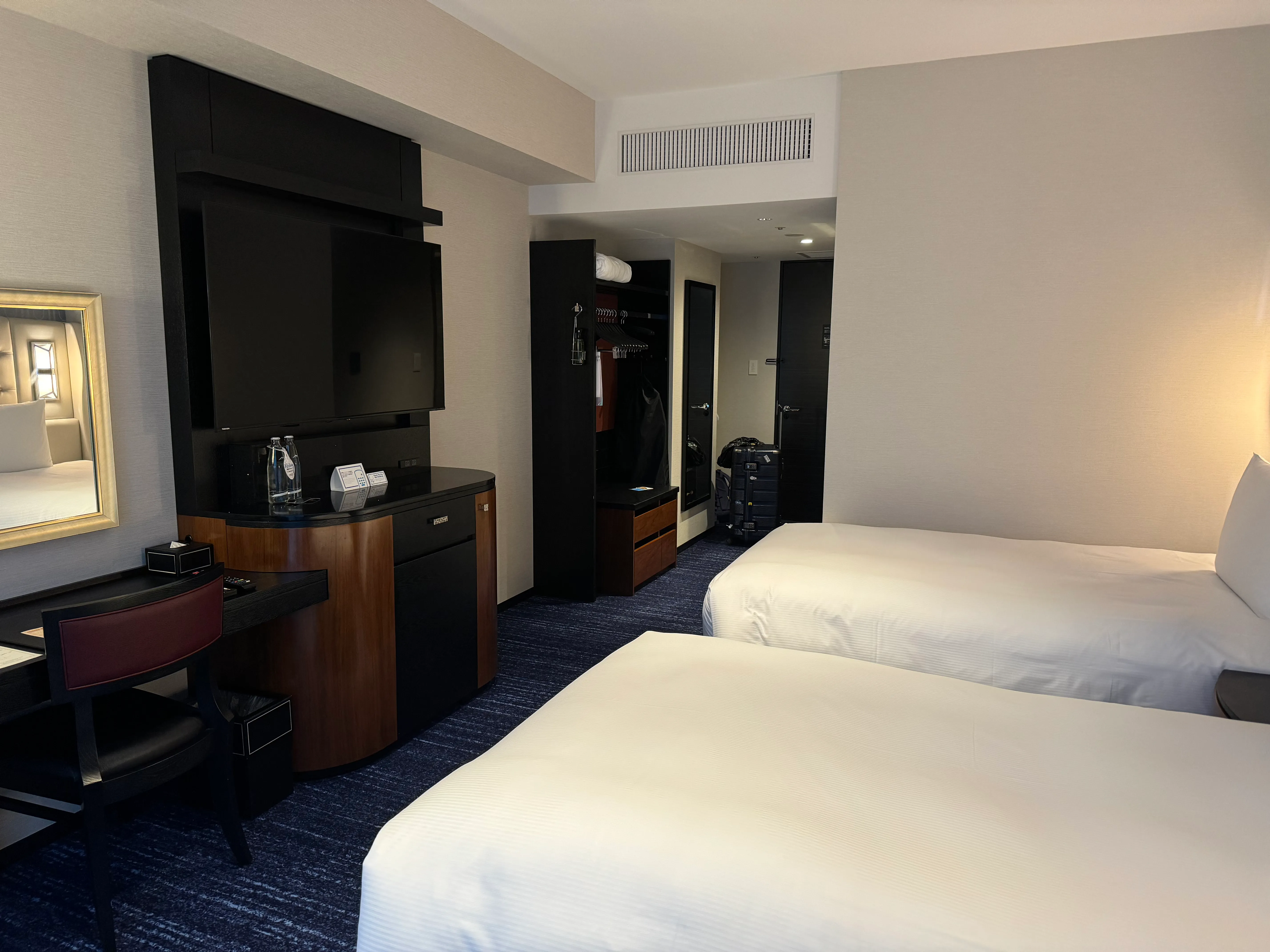 The room from the other angle.
I won’t claim to be a professional mattress reviewer, but I can tell when a mattress is bad. This one isn’t. The mattress isn’t too firm and there’s a lot of depth in the bed so you don’t feel like you’re sleeping on a wooden plank.
Two pillows were provided for each single bed in the twin room. They were soft and provided good head support. Overall the bed is well put together and I managed a good night’s sleep.
Blackout curtains were thick and did their job, so did the privacy curtains. Both of these help you to obstruct a very large full height window. The large window gives a sense of grandeur that most business hotels lack, though I don’t believe these could be opened for ventilation.
For a high traffic area near the Anpanman museum and with 20,000 people pouring out of the arena every weekend, the hotel is well insulated from all the surrounding noise. It feels nice and private in your room as it should be. Corridor noise is also muted due to the size of the bathroom acting as a good spacer between you and people walking back and forth. That being said, I would not use the word “sound proof”. If cars start honking or if an ambulance drives past you will still notice it.
Desk and Seating#
If you need to get some work done there’s a decently sized work desk, together with a chair. These are nothing exceptional to write home about, no fancy brands or adjustments, but they serve their purpose. The table comes with some necessities like power outlets and an ethernet connection. One of the more interesting choices is that they put a mirror on the same wall the desk faces, so I guess you can keep an eye on your roommate behind you, or use it for makeup.
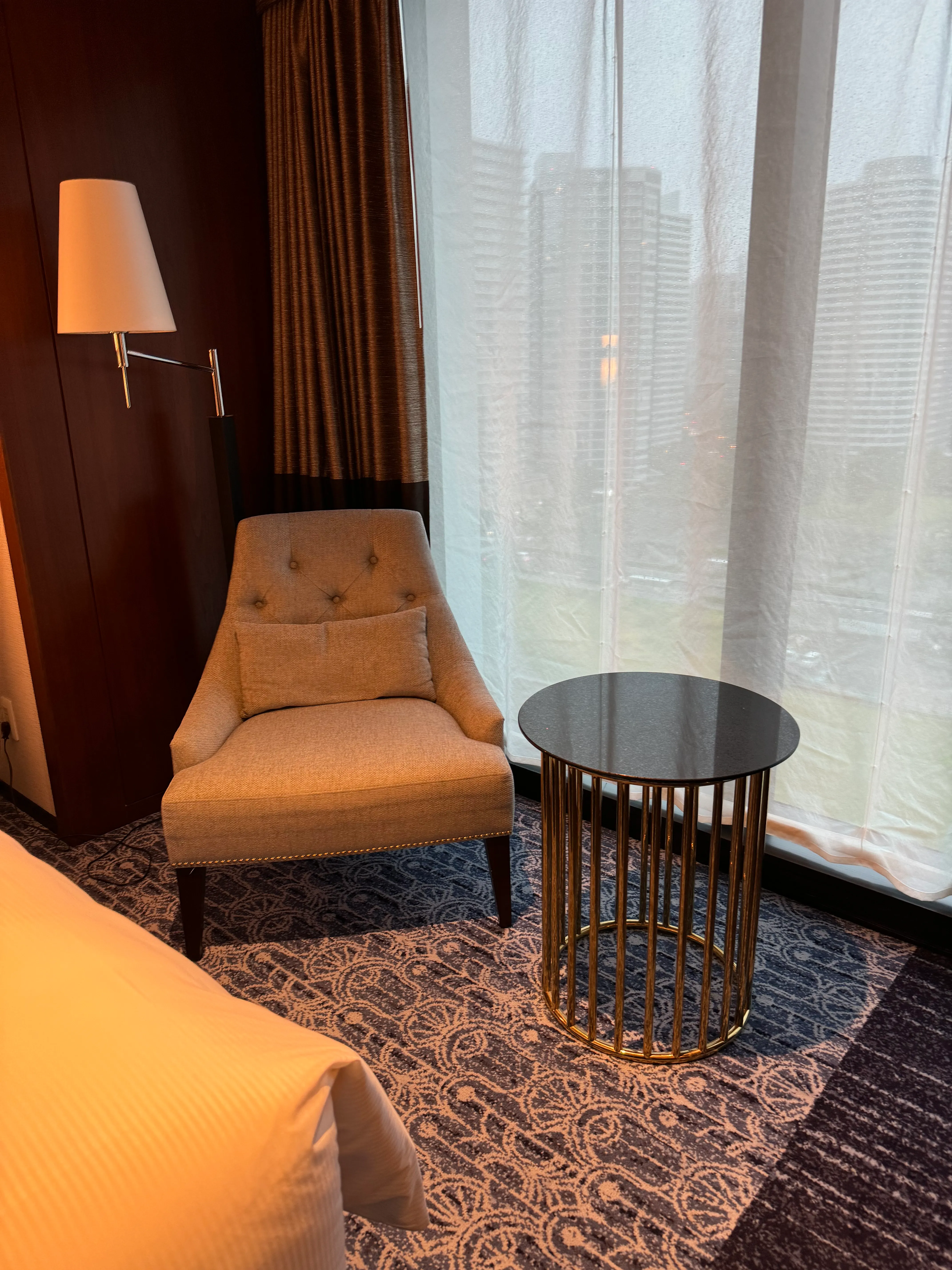 Additional seating in the room.
Now the hotel does provide a lounge chair in the room, and that would probably be my preferred seat compared to the one on the desk. There was no leg rest but the seat was comfortable enough that I don’t miss it. Next to that, a small coffee table. Despite its appearance, it had substantial weight which gives you confidence that it won’t just fall over. Unfortunately the birdcage design for the legs means you can’t tuck your feet under there if you wanted to use it as a substitute work desk.
Bathroom#
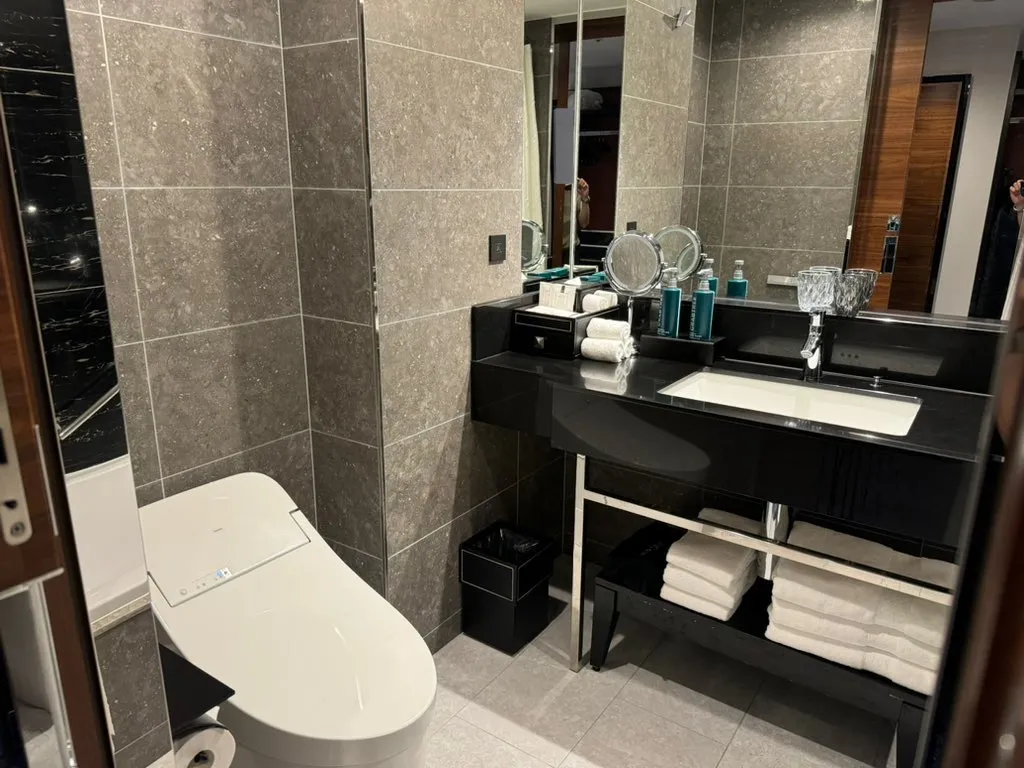 Bathroom of the Twin Deluxe Room.
The bathroom fixtures and amenities are noticeably a level above what you would normally find in a standard Japanese business hotel unit bath.
Bathroom of the Twin Deluxe Room.
The bathroom fixtures and amenities are noticeably a level above what you would normally find in a standard Japanese business hotel unit bath.
This particular room type does not have Hilton’s separate shower configuration—the hotel refers to the larger arrangement as a 4-piece bathroom—but the bathtub itself is larger than those found in most business hotels, and the shower includes a rain shower head.
More importantly, the rain shower was actually good. I’ve encountered plenty of cheaper hotels where adding a rain shower seems to be more of a checkbox feature than something you would genuinely want to use. Water pressure was good and I could get it strong enough to feel genuinely useful.
There are also some thoughtful details in the layout. The bath towels are larger than most business hotels and, are stored underneath the counter in a position that can be reached easily from the bathtub. You don’t need to get out while wet just because you forgot to grab one beforehand.
It is a tiny thing, but good hotel design is often a collection of tiny things like this.
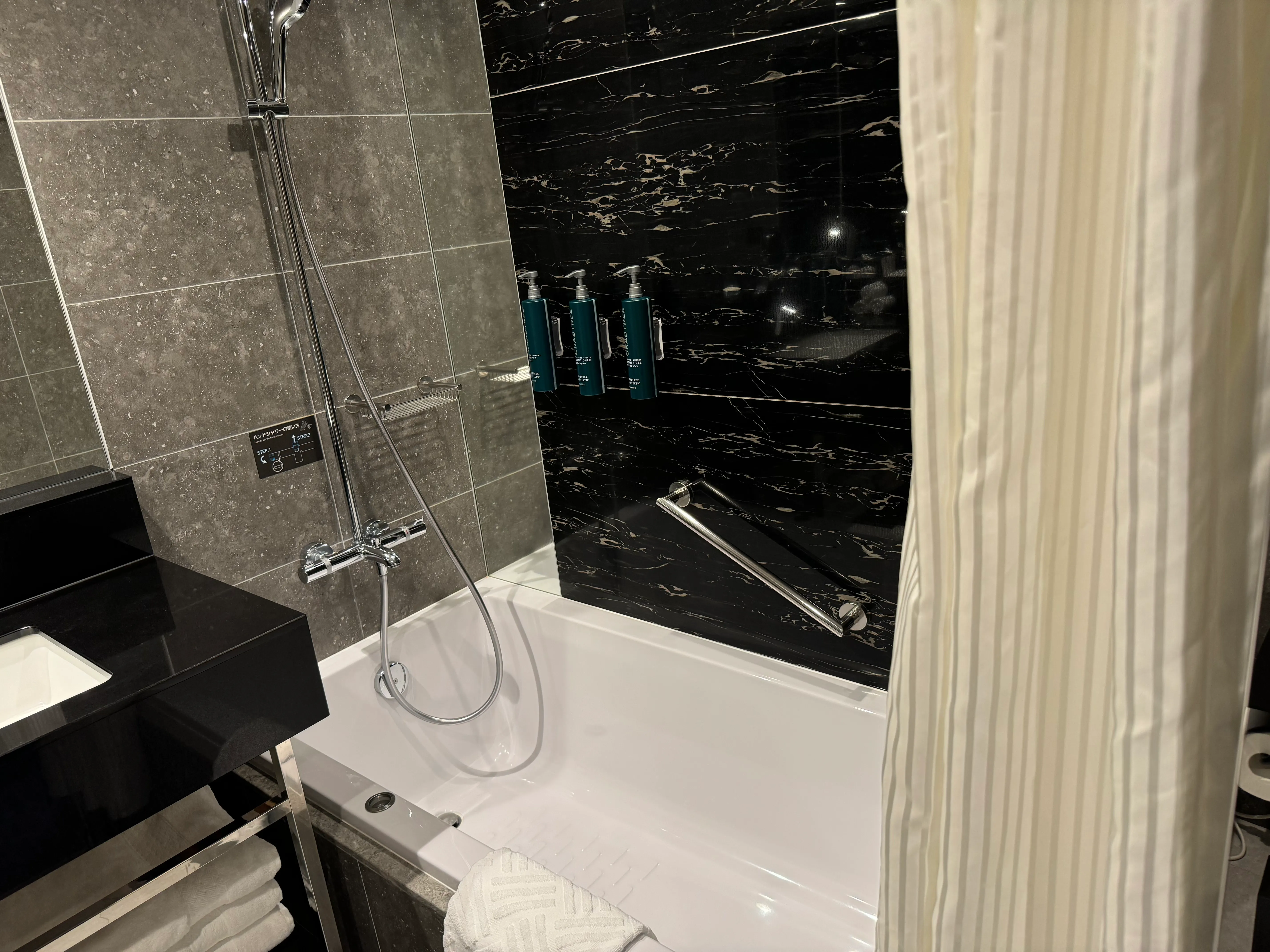 Bathtub with CRABTREE amenities.
The toilet features CRABTREE amenities, which are wall mounted in the shower area. These feel like the perfect height if you’re doing a standing shower, but if you were sitting in the tub these are mounted a little too high.
A toilet with installed bidet is available, as you might expect from most Japanese hotels. Seat and water come with heating options.
The toilet was pleasantly clean. The light colors for everything except the sink counter meant that any oversights in cleaning would be obvious rather quickly. The light tones are nice as they make the bathroom feel less gloomy.
In-Room Amenities#
Two complimentary bottles of water were provided each day, approximately 350 ml each. The water came in glass bottles and had to be opened with the provided bottle opener.
There were no wine glasses in my room. Instead, six drinking vessels were provided: two coffee cups, two short glasses, and two taller glasses.
A steam iron and ironing board were stored directly in the room, something I rarely see in cheaper Japanese business hotels. This saves you a trip to the front desk to borrow one.
There was no air purifier, which is actually one area where many cheaper business hotels have an advantage.
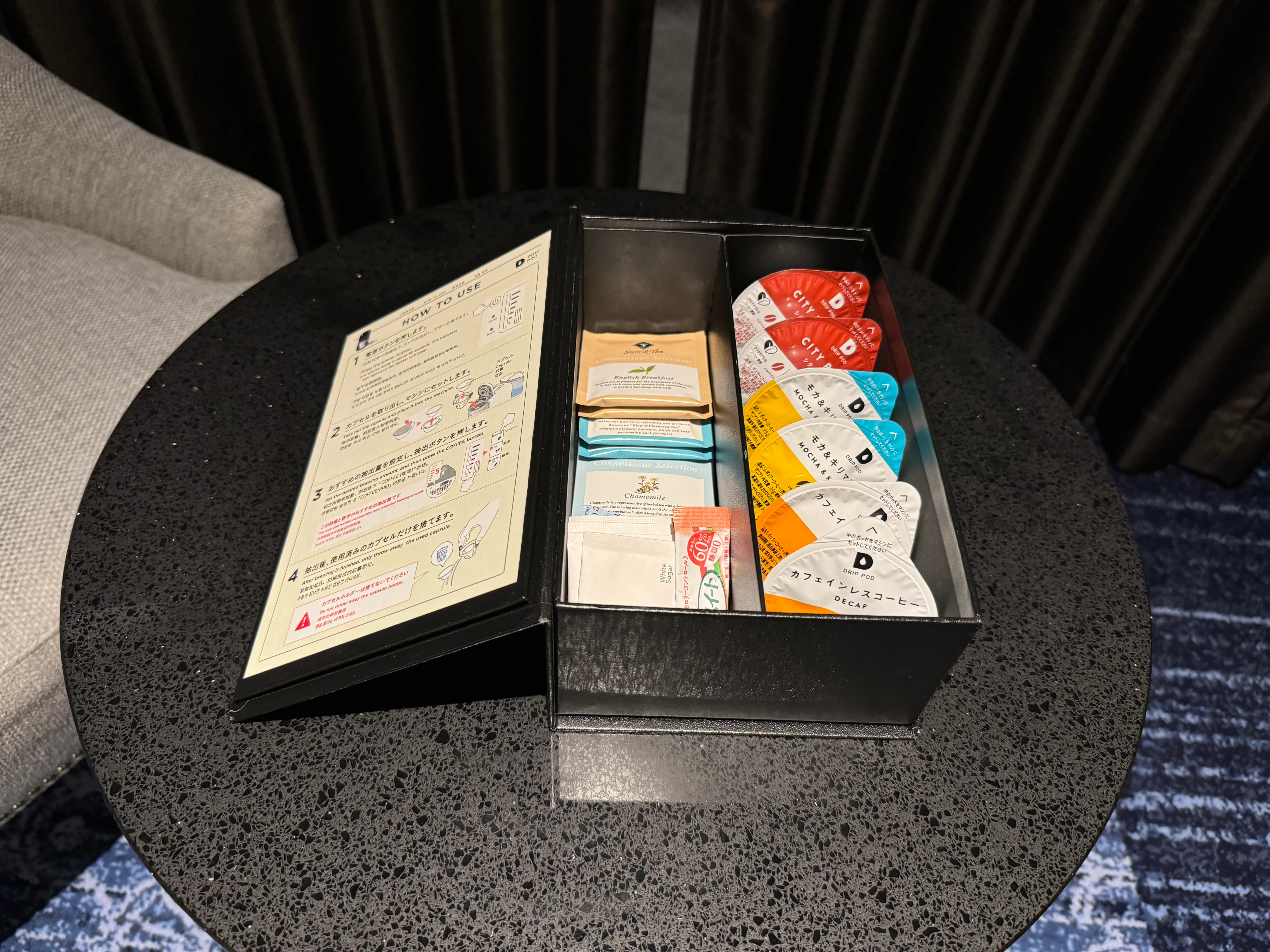 Drip coffee and tea selection.
The complimentary tea provided is SumikTea Connoisseur Selection, along with a selection of Drip Pod coffee, including a decaf choice.
Two Hilton-branded umbrellas were provided in the umbrella holder right next to the room door. The umbrella holder fits 4 umbrellas total. This turned out to be a lifesaver since I arrived on typhoon day, it helped with subsequent expeditions out of the hotel. This might just be the first hotel I’ve been to with an in-room umbrella rather than a shared stock at the front desk.
WiFi reliability was good while in the hotel. Unlike some hotels where you need an account to even get free wifi, I didn’t have to jump through hoops to login with my membership to get internet access. That scores good marks for me because it means fewer chores when you have multiple devices to set up. Also I don’t recall being kicked off my VPN session on hotel WiFi, something that has happened with some other business hotel chains that I’ve stayed at.
My only room related nitpick has to do with the card reader on the room door. It’s just not sensitive enough and probably the least responsive hotel-room card reader I’ve encountered. I legitimately thought I was doing something wrong or was too early to enter the room when I tried to use my card. There was no issue scanning the card at any other hotel facility elsewhere in the hotel, like the private lift lobby at the Music Terrace. I often found myself having to rotate the card around a bit to give the card reader a better chance of working.
Hotel Facilities#
The hotel comes equipped with a fitness center, meeting rooms and Executive Lounge for those eligible for access. It does not have a swimming pool.
Other amenities are available at the Music Terrace, including a convenience store (Lawson).
The whole hotel is non-smoking, but a smoking room is available on the 4th floor.
I have not made extensive use of the facilities, and my lack of Hilton elite status means I didn’t visit the executive lounge. You may want to find other reviews if those features specifically interest you.
Breakfast#
Breakfast is not included by default. If you’re a Hilton Honors Gold elite or higher you would get it for free. Otherwise, it costs 3000 yen per person per night.
Breakfast is served at Parade, a restaurant on the 3rd floor of the hotel, but to reach it you have to get off at the 4th floor, walk across and around the hotel to take a different flight of stairs down to the restaurant. Hours are 7am to 9:30am. While 6:30am is often the default for business hotels in Japan, do take note of the later opening hours. This could affect people who would like to start their day early.
Breakfast is a clear step above the average business-hotel buffet.
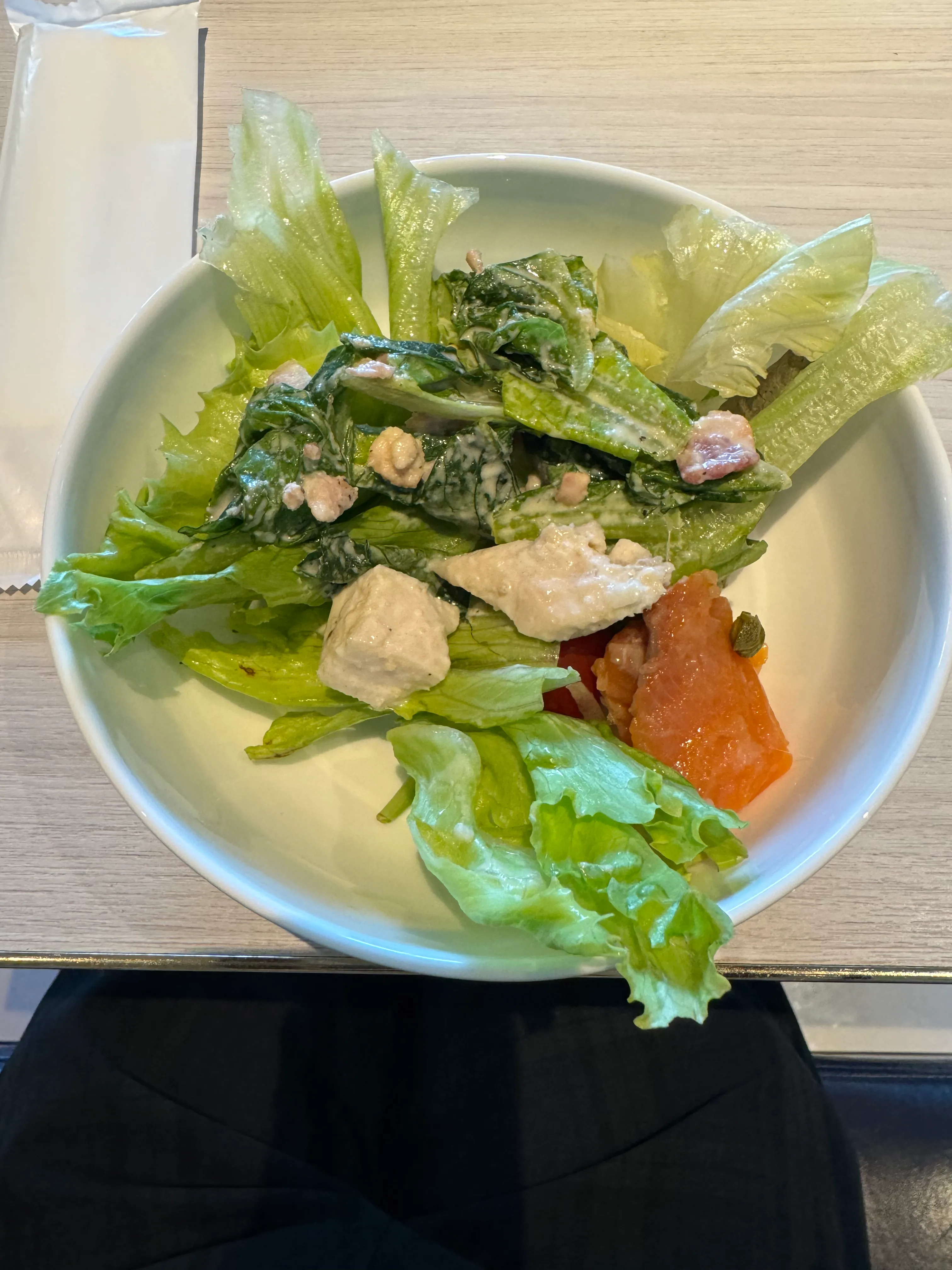 Salad. Or at least what it looks like after I randomly throw a couple options together in a bowl.
The spread included things such as cold cuts, dried fruits and nuts, alongside live cooking stations serving omelettes and Eggs Benedict. You have both Japanese and western style options to choose from. People who would like a more traditional teishoku style breakfast will be pleased to know that there are at least two varieties of fish available together with rice and miso soup. Western pastries are available if that’s your preference, and they’re pretty good too.
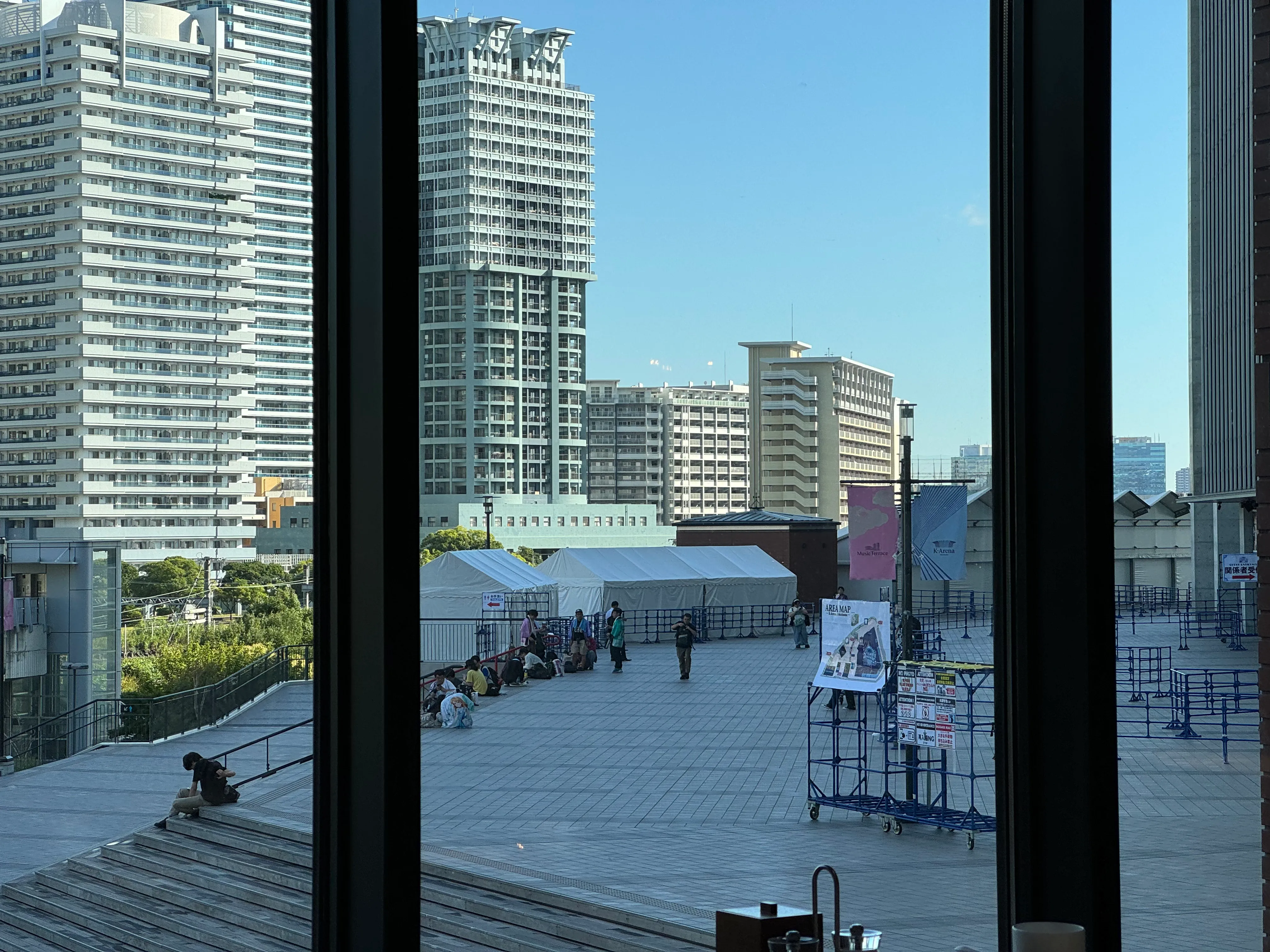 The view from the window seat. Or at least, what it would look like because I didn’t get one. Had to walk over.
If you get a table close to the windows, you can also see K-Arena while having breakfast.
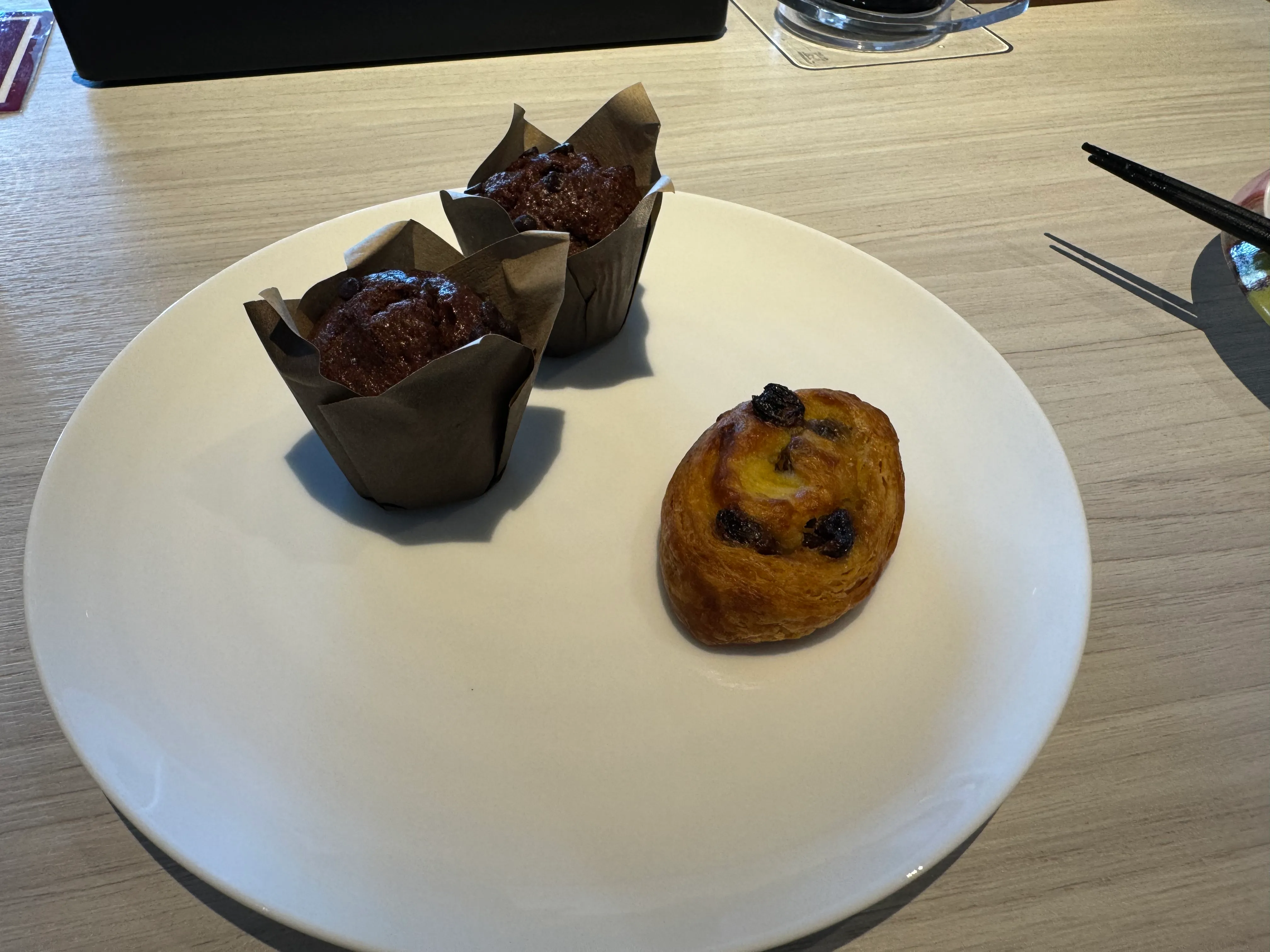 Mini Chocolate Muffins and a rasin roll.
Overall, I thought the food was good. My personal favourites were the salad selection, mini croissants, and mini chocolate muffins.
My main complaint was variety across multiple days. I stayed for three mornings, and most of the buffet remained essentially unchanged. The main differences I noticed were the soup and sausage selections.
For a one-night stay, this probably wouldn’t matter at all. Over several mornings, however, the repetition becomes much more noticeable.
There’s also a few more nitpicks I would throw in
On one of the days I had to wait approximately 5 minutes for entry because the line had stalled. Despite there being a lot of staff walking around empty tables, it took 5 whole minutes for someone to come over and check if the people queueing behind could be served or if some form of assistance was needed. That didn’t leave a good impression on the staff’s initiative in handling the situation.
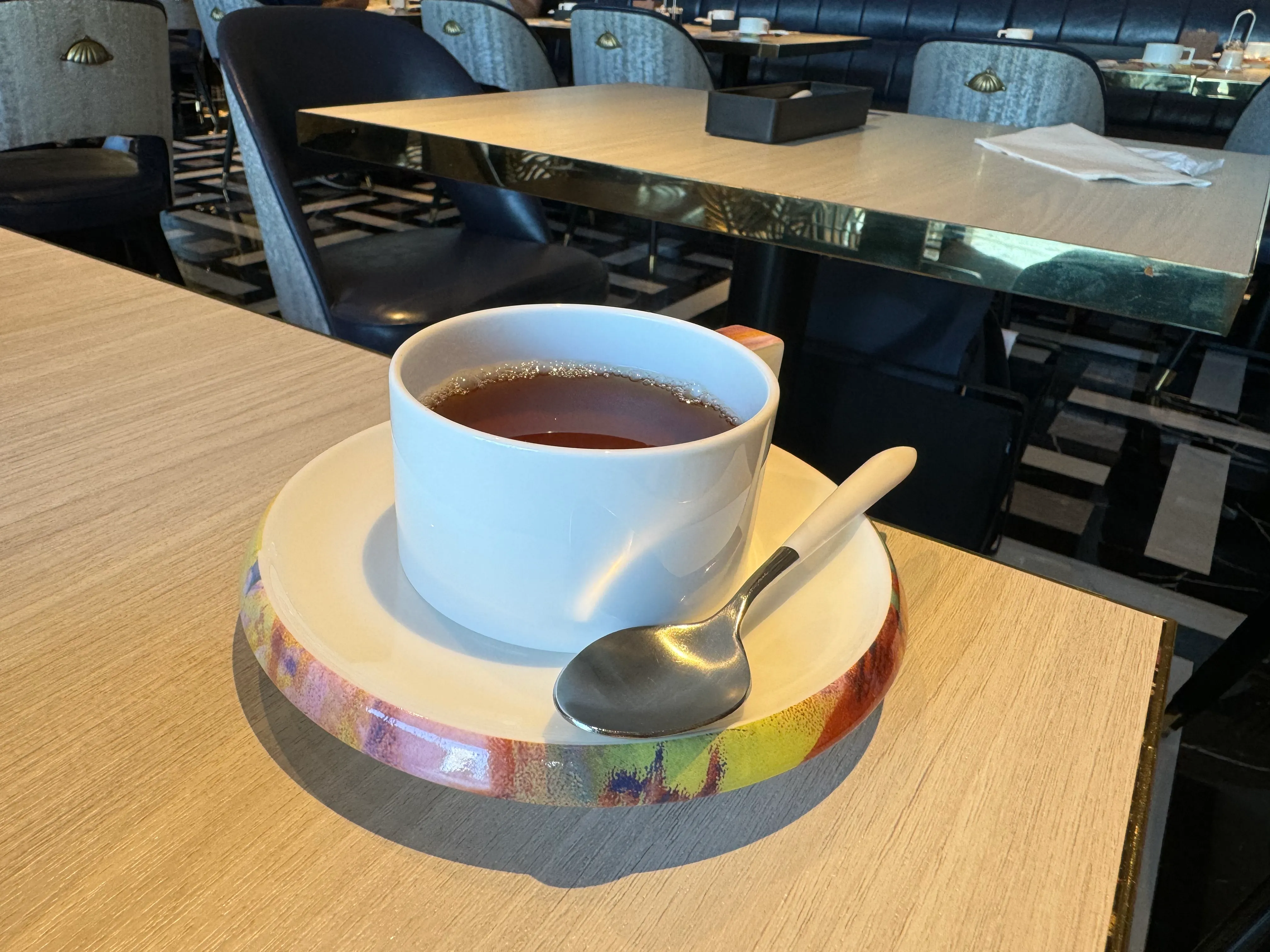 Default breakfast tea at Parade. This is the cup that they will refill constantly.
There is also a degree of unnecessary ceremony around the breakfast service. Guests are assigned a table, asked to turn over a card when they have finished, and then offered coffee or tea. Whichever you choose is brought to the table and attentively replenished throughout the meal.
While I appreciate the intention behind this level of service, I found it somewhat at odds with the otherwise excellent self-service options available just a few meters away, including a selection of teas and a bean-to-cup coffee machine offering freshly ground coffee and various milk-based coffee options. As a result, the table service felt less like a meaningful enhancement and more like ritual for ritual’s sake.
I can understand that this approach gives staff an opportunity to remain attentive to each table and discreetly monitor whether anything needs clearing or replenishing. However, there are surely more natural ways to deliver a premium, attentive experience without introducing service elements that feel unnecessary or overly choreographed.
Overall I still thought the breakfast was good. It is just expensive, which appears to be the name of the game at Hilton Yokohama. The food quality is legitimately a notch above the average hotel and the food variety is also much better. You need to consider carefully if breakfast is really worth the asking price for you.
The Real Reason to Stay Here: K-Arena Convenience#
This is where Hilton Yokohama becomes much harder to compare with an ordinary hotel.
The K-Arena entrance is less than 100 meters from the hotel’s lift lobby, a level of convenience that is unmatched by any other hotel in the area. The lift lobby gives you a private exit onto the Music Terrace. Once you step out, you are right in front of the venue.
When you’re attending a live, your hotel room effectively becomes an extremely convenient private base beside the venue.
You can return to your room to:
- use your own private bathroom instead of the venue facilities;
- shower immediately before the concert;
- drop off shopping and bulky purchases;
- leave merchandise or equipment such as a mirrorless camera behind;
- take a break somewhere quiet and away from the crowd;
- pick up large concert items such as UOs or penlights immediately before heading inside;
- change clothes or reorganise your belongings;
- swap to a smaller bag before heading to appointments after the show.
Its not exactly revolutionary but these are very tangible friction removers. Having your base camp this close changes how much it costs to return to it.
There is no long journey back to the hotel, no debating whether an item is worth carrying around all day, and very little penalty for forgetting something in your room.
This convenience is the biggest reason I can justify Hilton Yokohama’s price premium.
If you read that list and immediately thought, yes, I would use half of those things, then there is a good chance you will get much more value out of the hotel than someone visiting Yokohama for an ordinary overnight stay.
Back in 2024 and early 2025, the Music Terrace was a notorious choke point for leaving K-Arena. This meant very long queues leading to the station, sometimes in excess of 40 minutes. The opening of a second walkway leaving the Music Terrace resolves this somewhat if crowds are competently managed. Hilton Yokohama gives you another option: ignore all of that and be at your hotel instantly.
There’s also a small opulence factor to it. The Music Terrace gets packed with people once it gets closer to show time or when the show ends. Entering and exiting the hotel lift lobby doors attracts quite a few eyeballs, especially if you are dressed for the concert.
Value for Money#
This is the difficult part.
Hilton Yokohama is not cheap.
At around ¥34,000 per night, you’re spending substantially more than you would at the many perfectly adequate business hotels around Yokohama.
But for K-Arena attendees, proximity changes the value equation considerably. It offers you a private base literally next to the venue. That is the real value proposition. If this was any other hotel brand, we would still be having the same convenience conversation.
Sharing also makes the maths much more attractive. Depending on the room configuration, rooms can accommodate up to three guests, so splitting the bill with one or two friends can dramatically reduce the per-person premium.
If you split it between two people, the price drops to around ¥15,000 to ¥17,000 per person. Adding a third person generally incurs extra bed charges of around 10,000 yen, but that still means 3 people can enjoy the convenience.
Verdict#
Would I stay again? Probably yes.
Would I recommend Hilton Yokohama to everyone attending K-Arena? No.
If you value convenience, good service, thoughtful details, extra space, and a little bit of luxury, Hilton Yokohama is an extremely good fit.
It’s sort of like pay-to-win in a game with microtransactions. Anyone can attend the live if you have a ticket, but by paying more for your accommodations you get a lot of friction removed.
If you can share the room with friends, the proposition becomes even more convincing.
On the other hand, if your main priority is keeping accommodation costs down and you only need somewhere clean to shower and sleep, there is absolutely no need to spend Hilton levels of money.
For K-Arena and Pacifico Yokohama events, I like the area around Bashamichi for cheaper business hotels. Staying one or two stations away is hardly a major sacrifice.
And ¥30,000—or potentially much more—per night should not be treated casually. That money could just as easily go towards another good meal, more merchandise, another trip, or another live.
For people who don’t usually book luxury hotels, this might be the convenience upgrade that finally convinces them to do so.
Overall rating: Very Good if staying for a live show.
Room: Excellent
Service: Good
Breakfast: Good
Location generally: Average
Location for K-Arena: Excellent
Value: Good (Very Good if split between multiple people)
Best for: K-Arena attendees who value convenience, groups splitting a room, and travelers willing to pay extra for comfort.
Skip it if: You mainly need an inexpensive place to sleep and would rather put the price difference towards the rest of your trip.